What it is
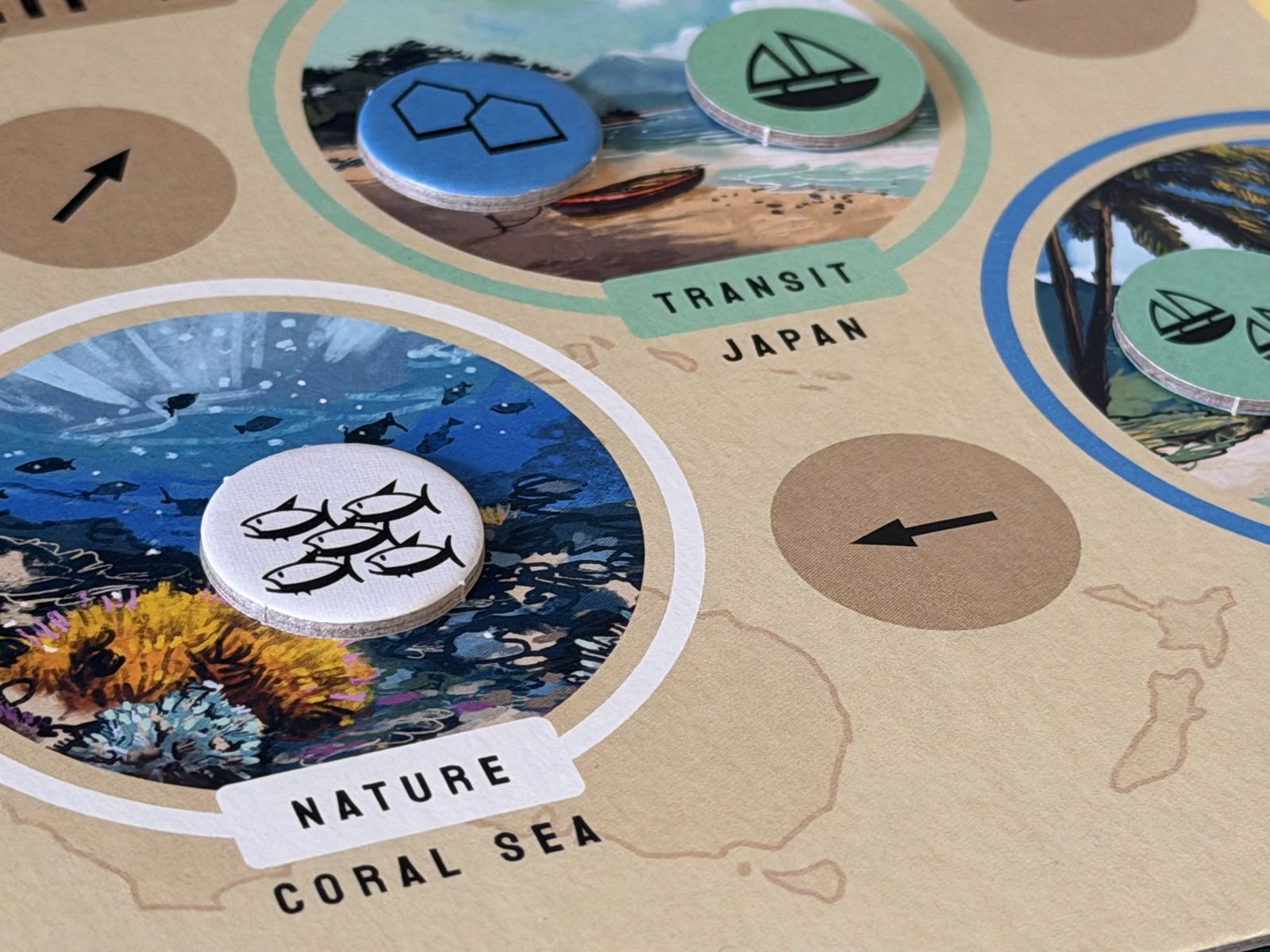
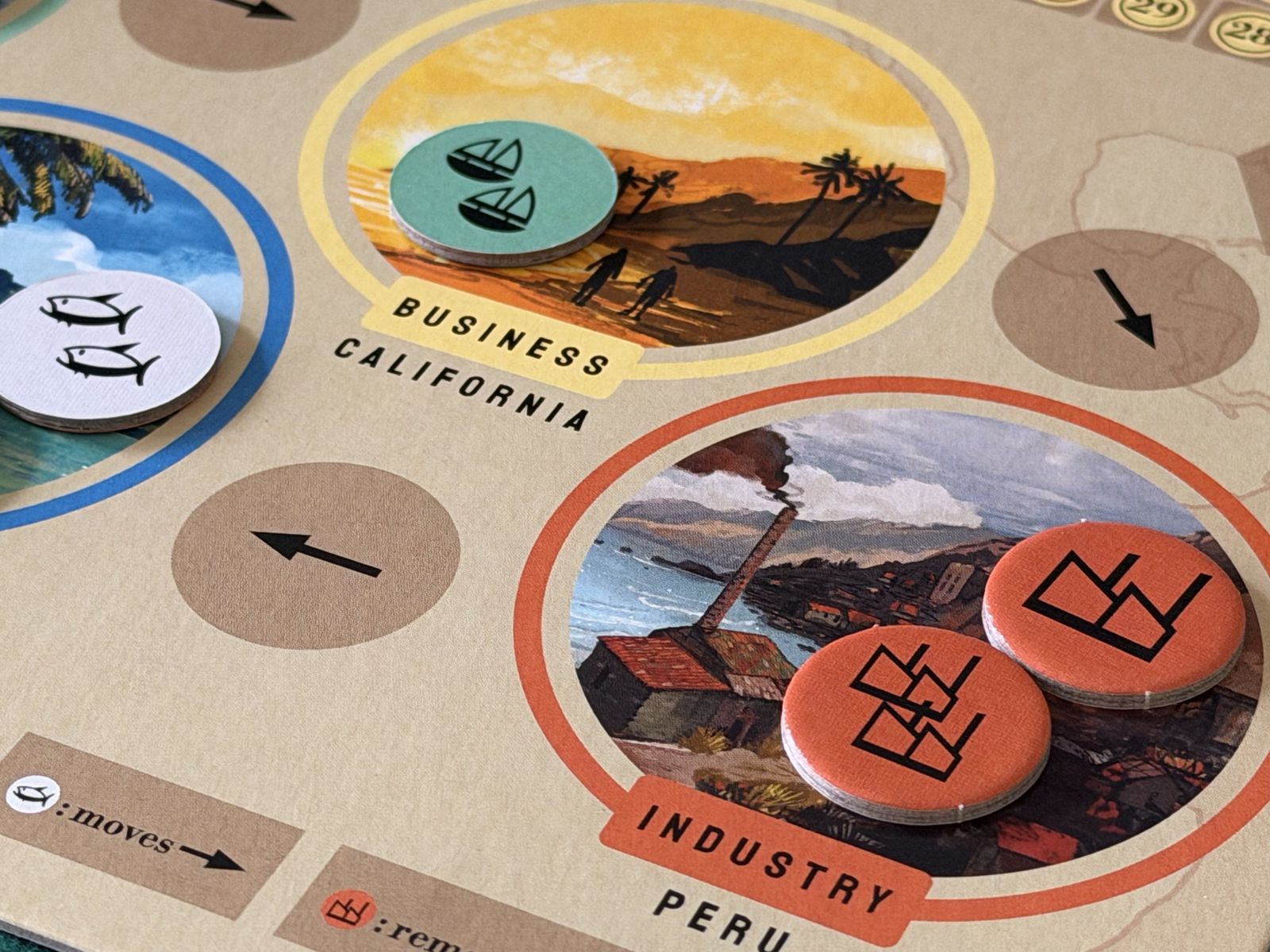
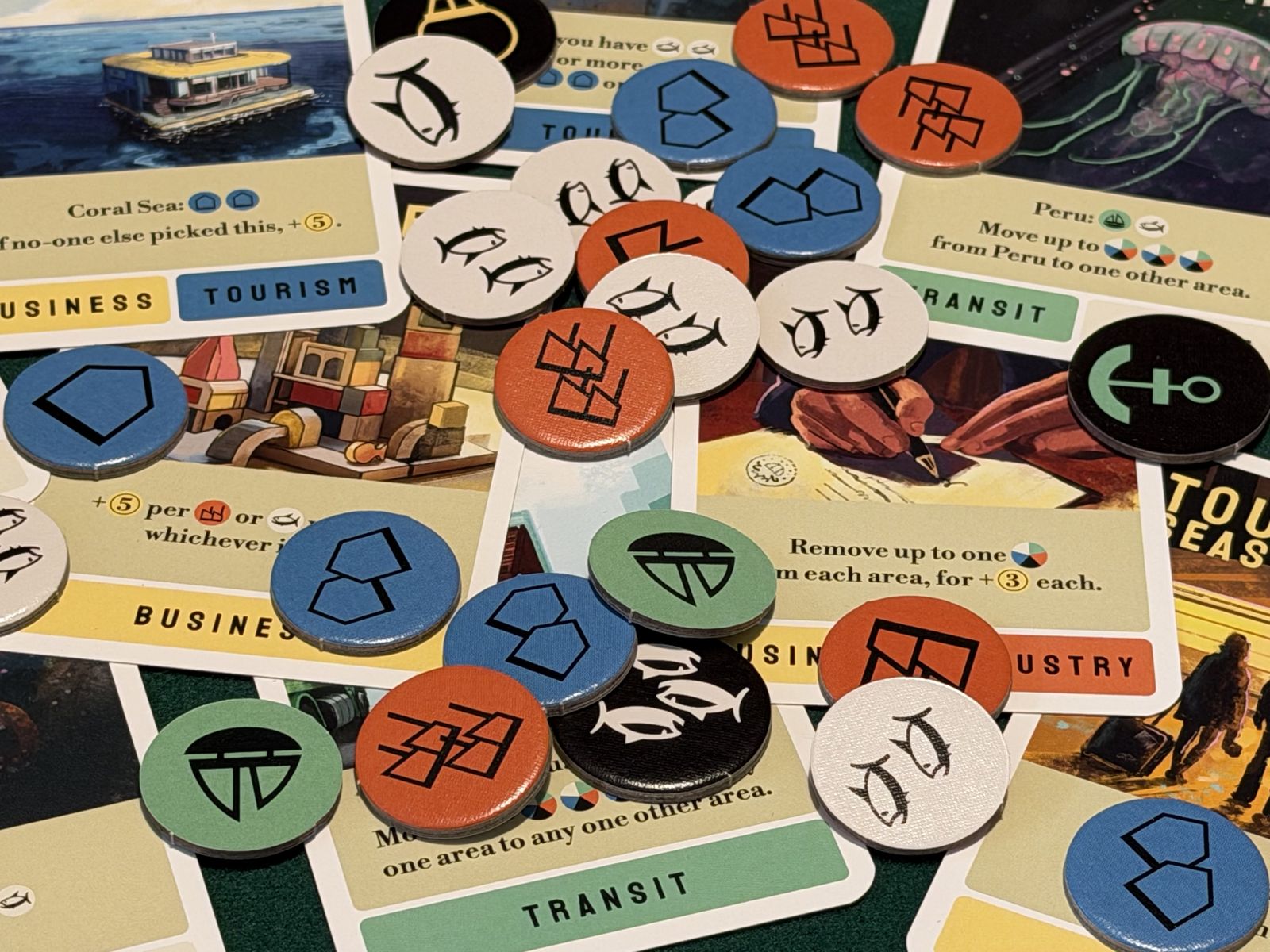
Pacific is an economic game set on the shores of the Pacific. Everyone has their own ocean in front of them, split into five zones in a circle: Japan, California, Peru, Polynesia and the Coral Sea. The goal is to make more money than everyone else by putting hotels, fishing boats and factories in the right zones, and getting them to work.
Every piece earns in its own way. When a zone runs, hotels bring in a little money, boats earn based on the fish around them, and the fish meanwhile swim on to the next zone, so they’re here now and gone next turn. Factories make a lot of money in one go, but to do it they eat up the other pieces in their zone.
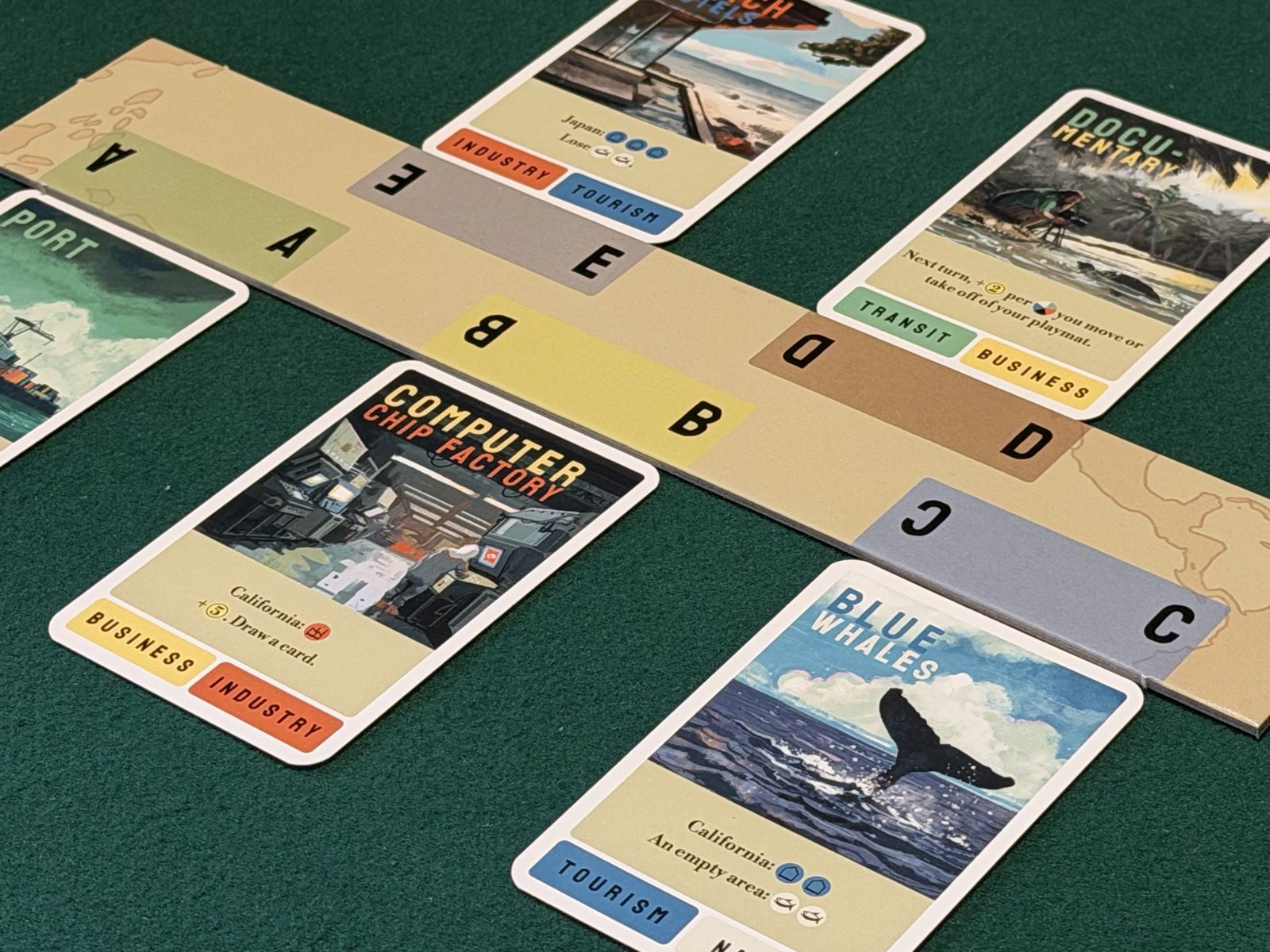
Everything goes through the cards, which tell you what to build and which zones to run. Your hand is the one you’re dealt at the start, and each turn everyone reveals a card; then each player secretly picks which one to use, their own or someone else’s. That’s where the interaction is: the card you play might help the others too, and the one you need might come from your neighbour.
How it plays
There isn’t a lot of interaction, everyone mostly looks after their own board. You build a plan around the cards in your hand, but the ones the others reveal might be better, and if so, great. Holding a card back just to avoid doing someone a favour is pointless: sooner or later you have to play it, and sometimes it’s better to do it early.
There’s no dominant strategy. Fish pay well but they move, so it’s hard to rely on them alone. With the right cards you can put down plenty of hotels, and then all you have to do is keep those zones running. Factories pay a lot, but save them for the end: they remove pieces you need during the game, while a good clear-out at the very end, together with the cards that multiply your money, pays off big. It’s quick to learn and plays fast.
The nugget
Donald X. Vaccarino, the designer, told the story of how Pacific came about on BoardGameGeek. He likes drawing random cards and making the best of whatever turns up, but he knows plenty of players can’t stand it. So he made a game where chance deals your hand, but nobody forces you to play your own cards. So much so that if you had copied the winner’s every move, you’d have ended up tied.
At our table
Easy, quick and very much multiplayer solitaire, even if the card you need might be in your neighbour’s hand.
How long does Pacific take?
The box says 30–60 minutes. At our table: 40 minutes at four.
The box
In which game do you copy your neighbor the most?
Here you can take their card, and nobody complains.
Also on the table
Thanks to Rio Grande Games for sending us Pacific.