What it is
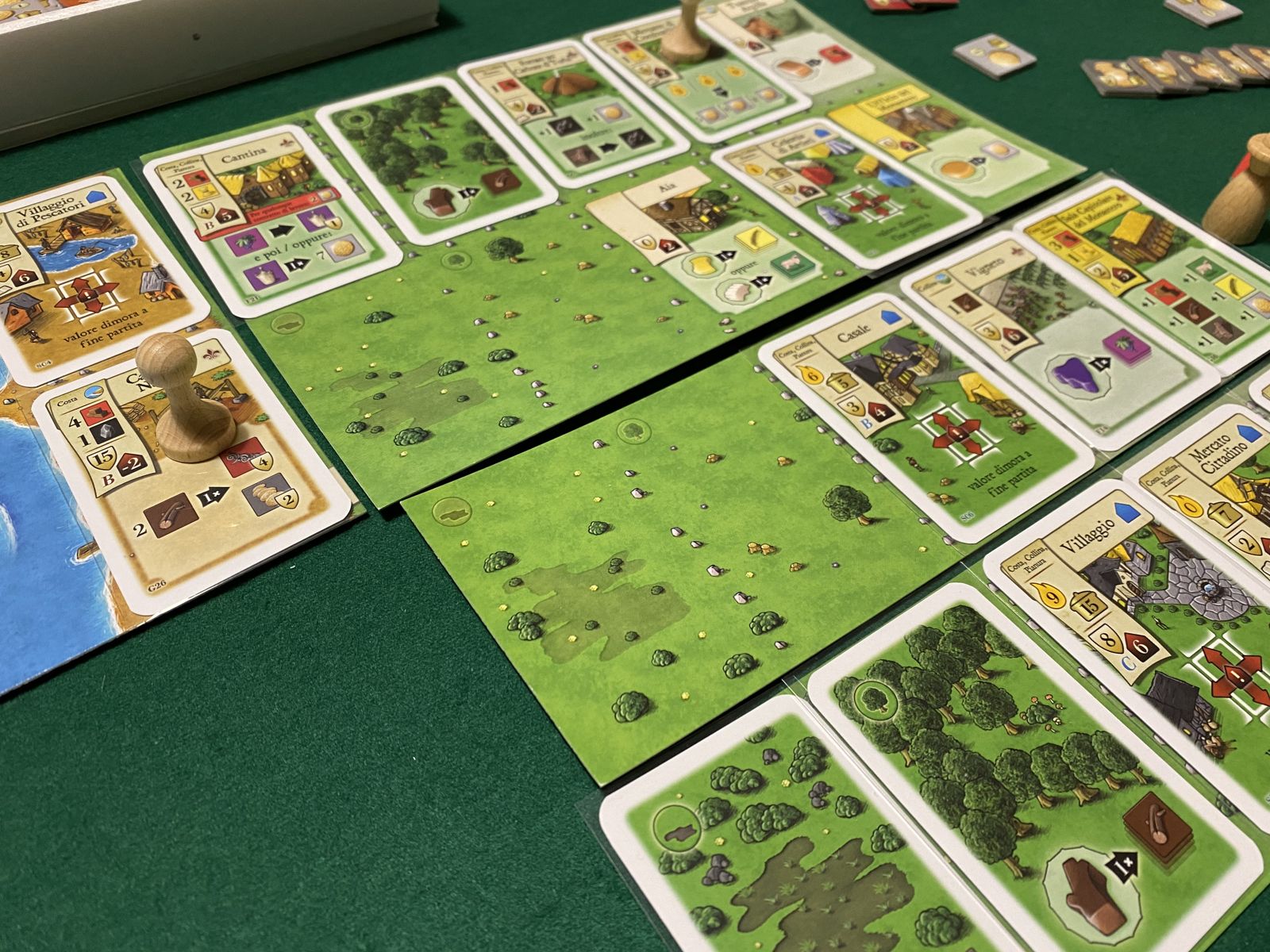
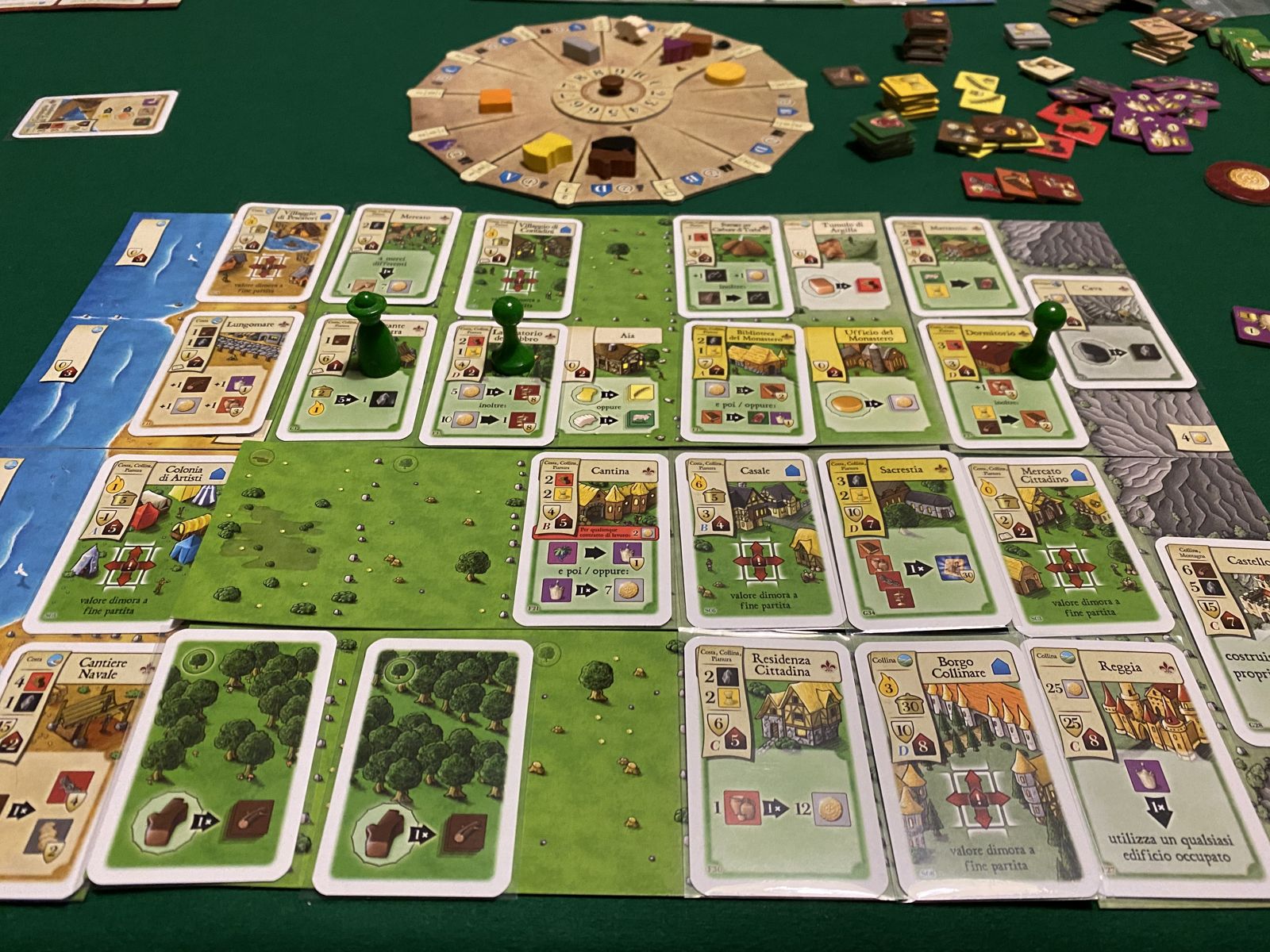
Ora et Labora is a heavy euro by Uwe Rosenberg, a real beast of a game that can last anywhere from one to three hours. Each player runs a medieval monastery, puts up buildings on their land and produces all sorts of things, from peat to books. The whole game is one long production chain, where basic resources gradually turn into more valuable ones.
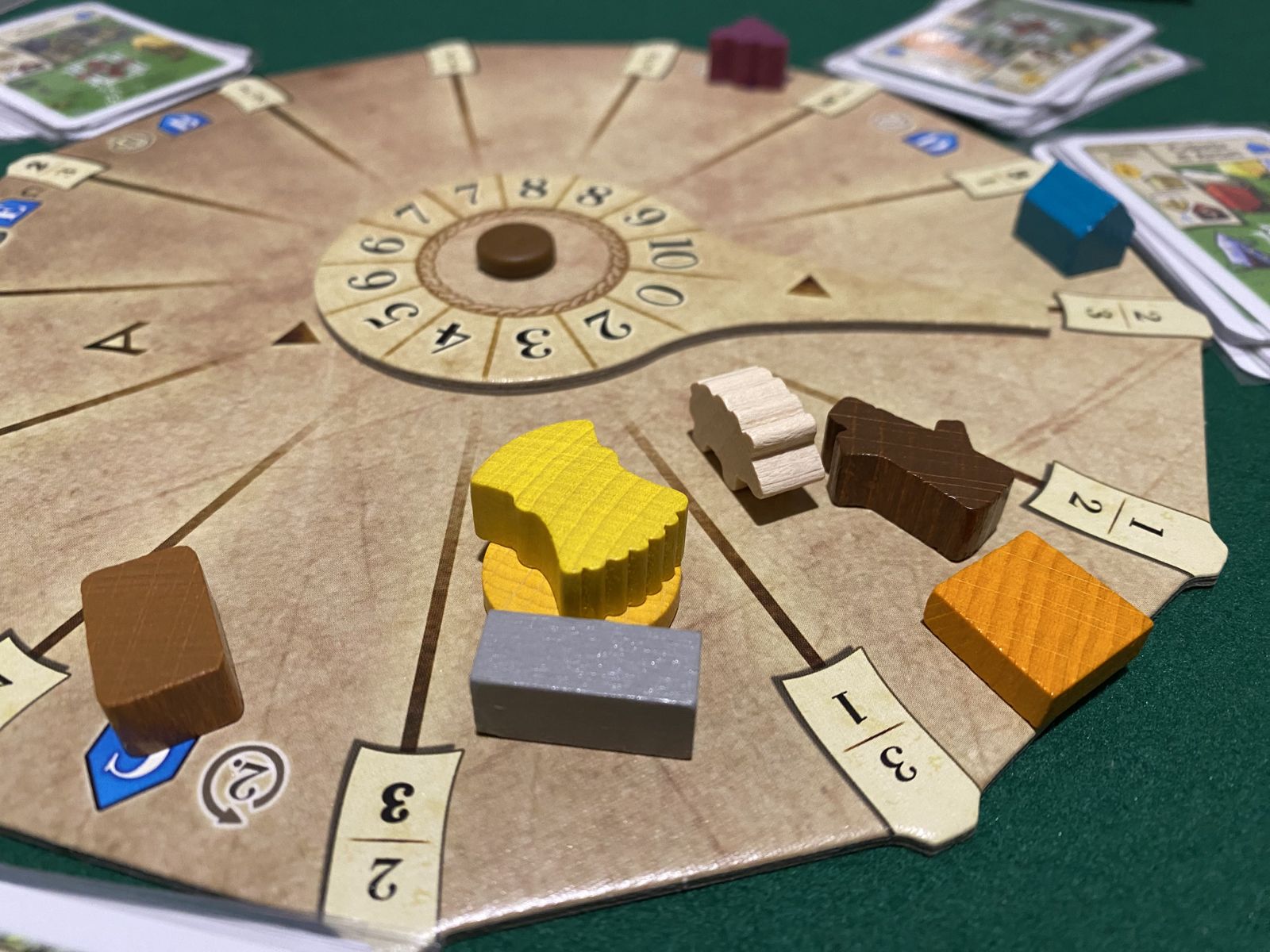
The basic goods sit on a shared wheel that makes them grow for everyone each time it turns. Taking early pays little, waiting pays more, but in the meantime someone else can come along and take the whole pile. Sometimes it’s worth settling, if you really need that resource.
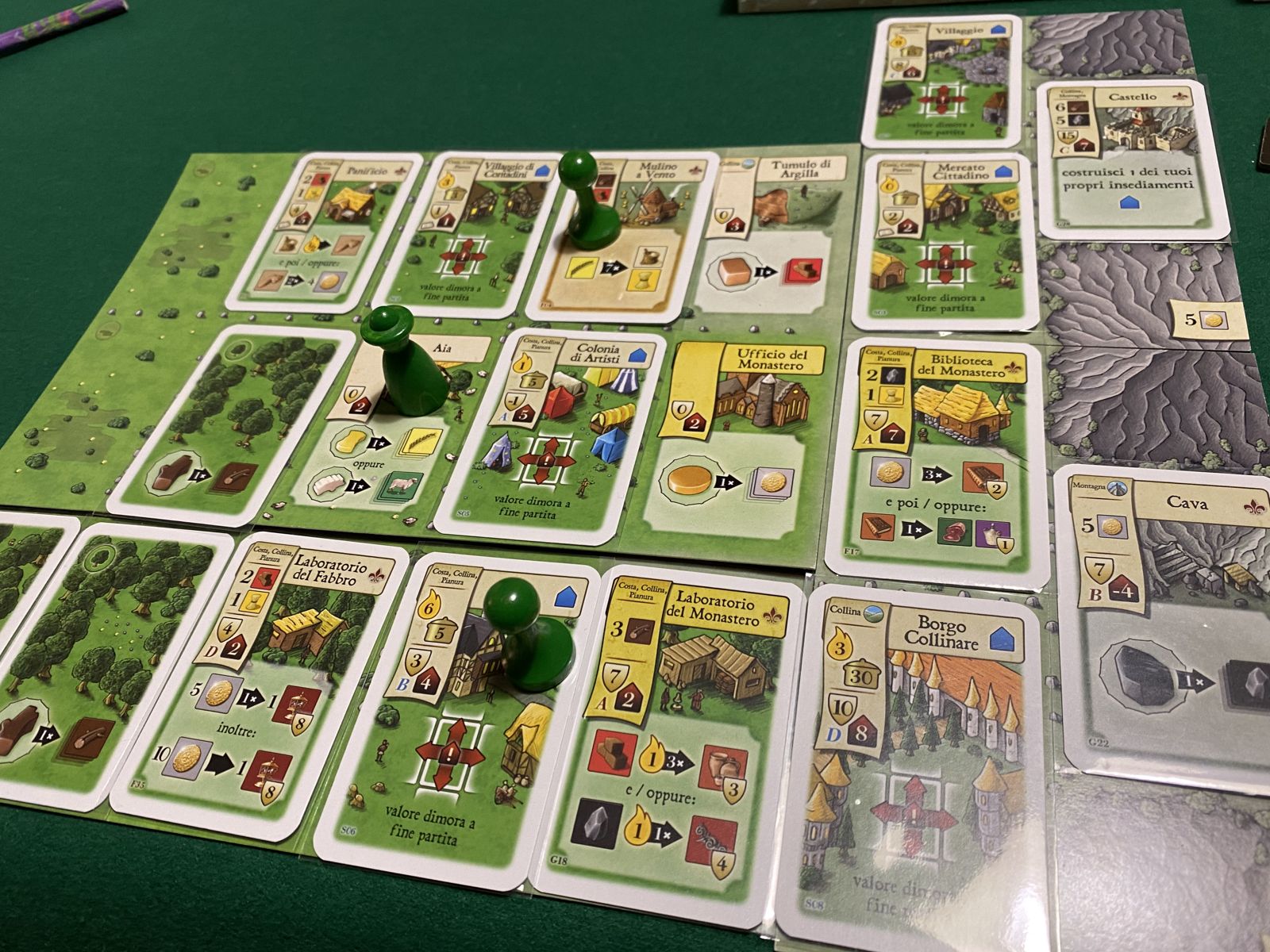
Buildings aren’t drawn at random: they’re always the same and arrive in the same order, game after game. And the ones the others build can be used by paying rent to the owner, so a building you put up can serve your opponents too.
How it plays
Knowing the buildings by heart makes a big difference. Whoever knows that a particular card will turn up a couple of phases later aims for it from the first turn, and often dominates the game. For first-timers it’s a real disadvantage: there’s a sheet listing them all, but until you’ve played you don’t understand which one you really need.
Rent opens up a path that other Rosenberg games don’t have. Sometimes it pays to build something you don’t need, just because you know everyone will want it. And on the wheel you always hope nobody empties the pile you’re waiting for. Sure enough, someone does!
At our table
Ora et Labora is a Rosenberg, so you produce resources and convert them, but with two things all its own: a wheel that makes goods grow for everyone, and buildings that always come out in the same order.
How long does Ora et Labora take?
The box says 60–180 minutes. At our table: 110 minutes at two, 120 minutes at three.
The box
What’s your favorite Rosenberg game?
Agricola, Le Havre, Patchwork, Caverna: he’s made so many that everyone has their own favourite.