What it is
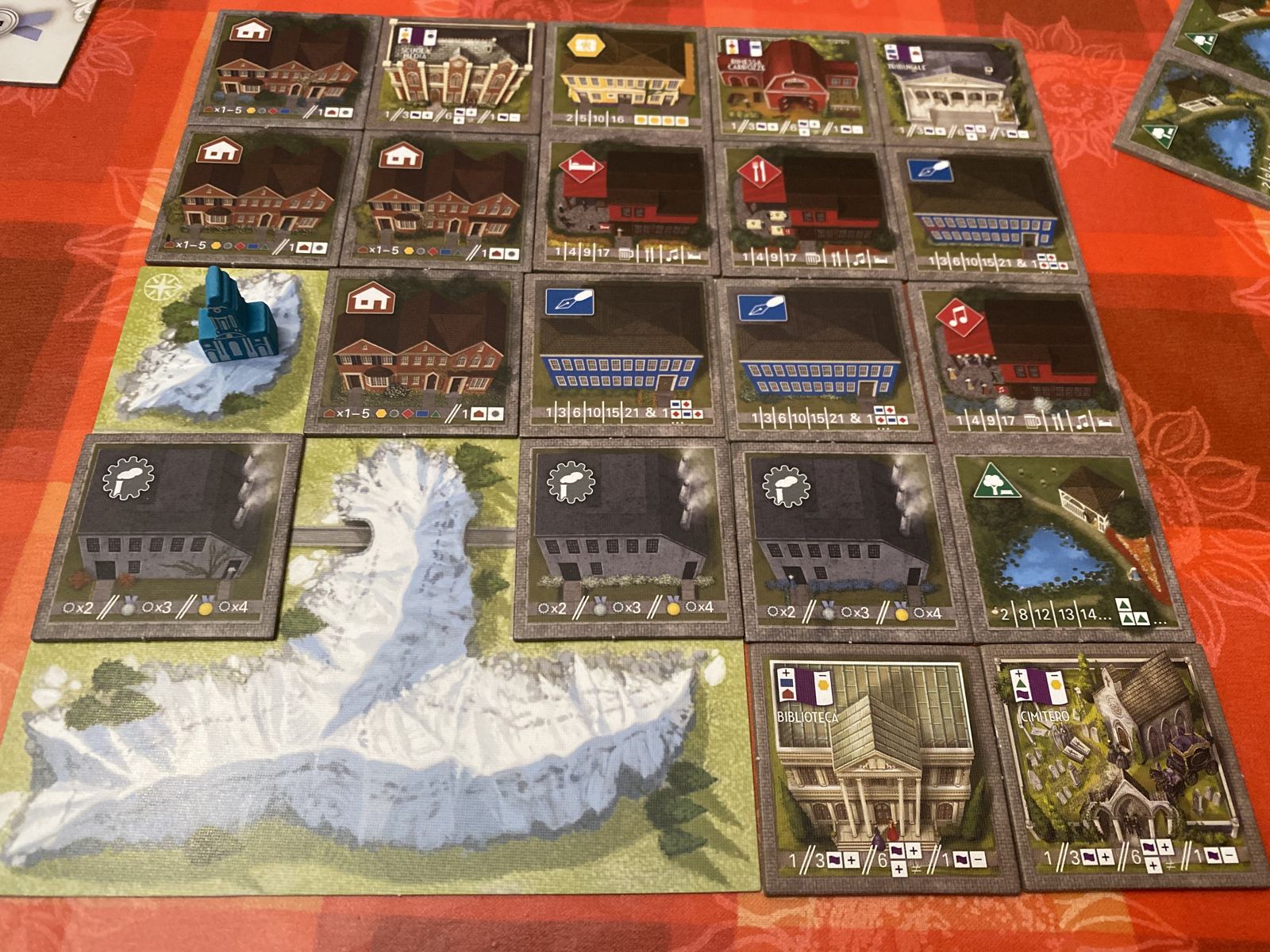
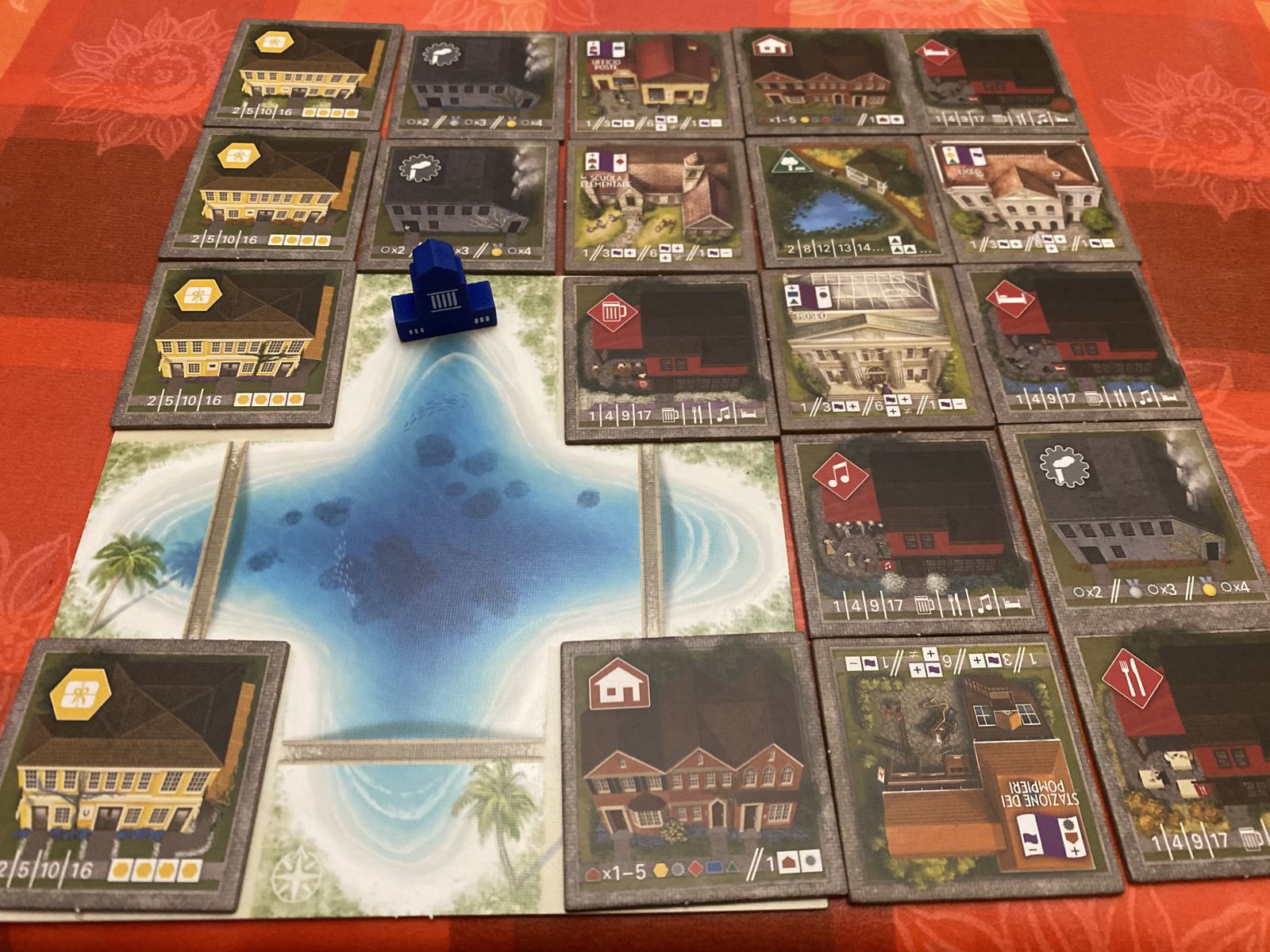
Between Two Cities is a light, quick tile-laying city builder that handles up to seven players. The tiles are pieces of a city, parks, factories, offices, houses, and each one is worth more if it ends up next to the right ones, like houses next to parks and schools.
Here, though, nobody has a city of their own. Everyone builds two, one with the neighbour on their right and one with the neighbour on their left, and decides together with each of them which tile goes where. The tiles are drafted: you keep one and pass the rest.
At the end each city gets its own score, but for you only the weaker of your two counts. So you have to keep them balanced and cooperate with both neighbours, even though in the end everyone is playing to win on their own.
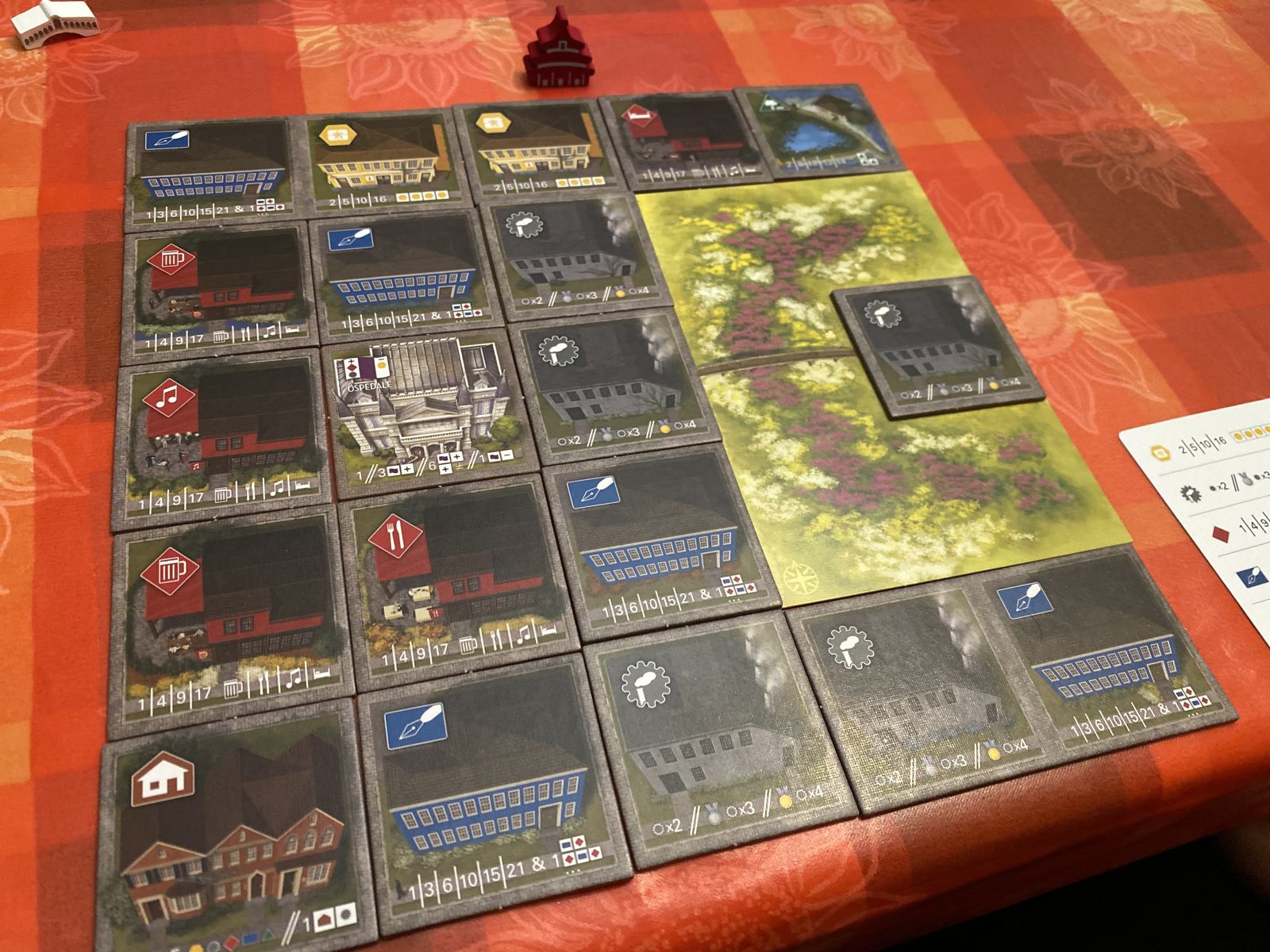
How it plays
At our place it comes out when there are lots of us, because everyone plays at the same time. Tiles are picked simultaneously, so there’s no downtime and the game flows even with seven. But the half hour on the box isn’t enough: you discuss with your neighbours what to place and where, and it’s normal to take twice as long.
It also leaves no one behind. If someone at the table is playing for the first time, their neighbour helps them whether they like it or not, because that city is theirs too. My advice is to keep an eye on both cities from start to finish, without growing one at the expense of the other.
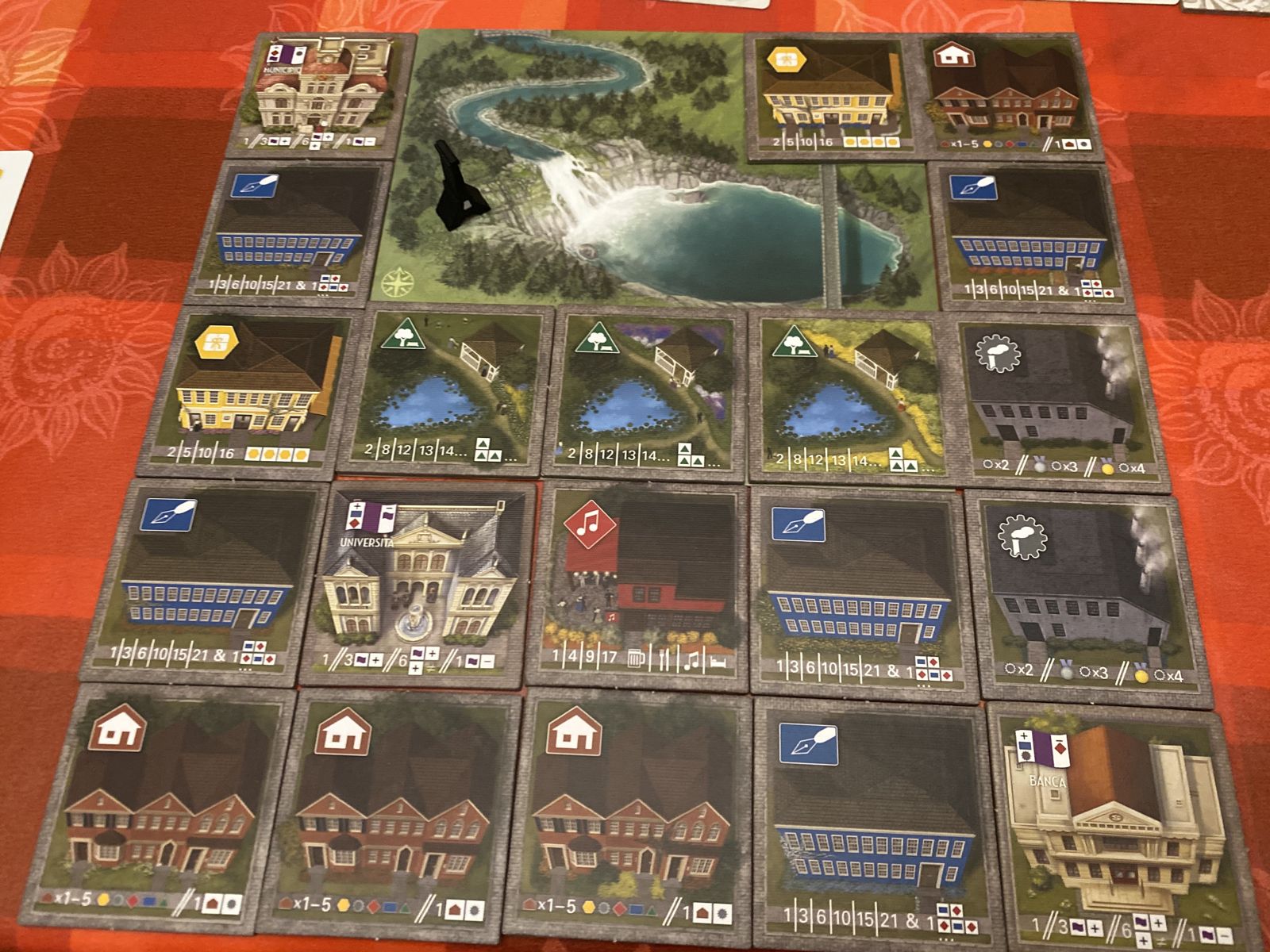
At our table
Between Two Cities works brilliantly even with seven, and there aren’t many games you can say that about.
How long does Between Two Cities take?
The box says 30 minutes. At our table: 60 minutes at five, 60 minutes at six, 50 minutes at seven.
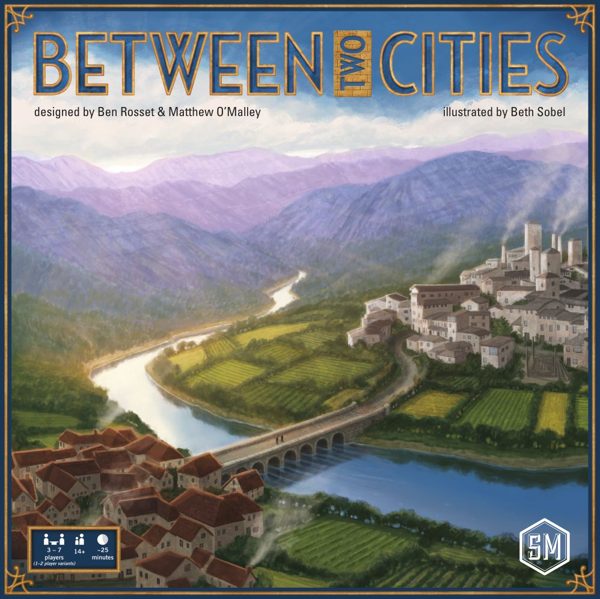
The box
What’s your go-to game for seven players?
Above five players almost everything grinds to a halt, and the list of good ones is short.