What it is
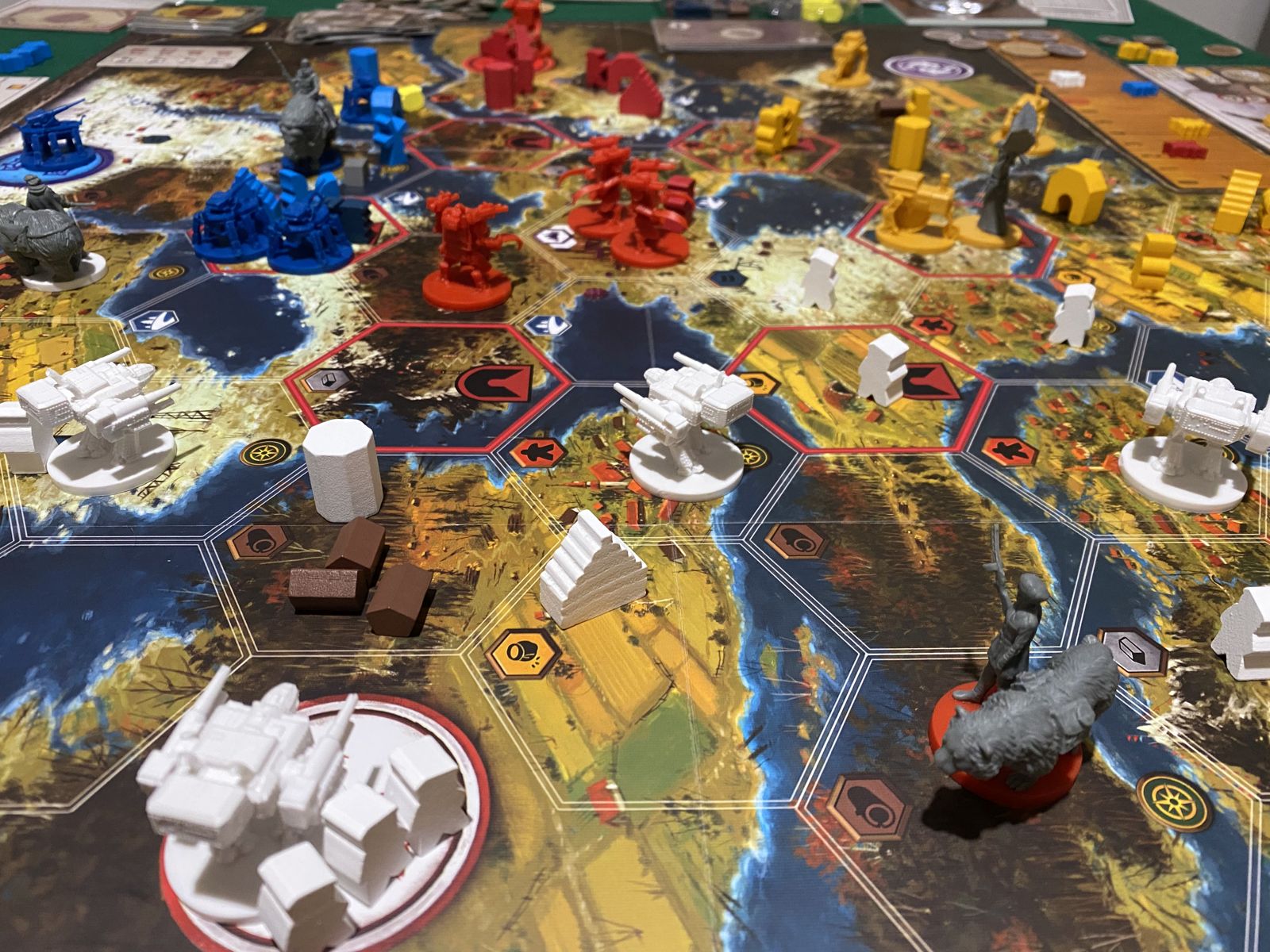
Scythe is a development-and-expansion euro game with miniatures, set in an alternate 1920s Eastern Europe where, after the war, factories built huge fighting machines, the mechs. Everyone leads a faction, each with its own power, and tries to make it grow more than the others.
You produce resources, move workers between farmland, forests and villages, put up buildings and deploy mechs. Each faction has an action board split into four sections, and upgrading it makes every move more efficient: that’s where your economic engine starts.
The goal is to earn stars, one for each milestone you reach, while combat can give you two. When someone places their sixth, the game ends and you count your coins, which are the points. Interaction comes mainly from your neighbours on the map, who you compete with for territory and whose actions trigger bonuses for you. There are battles, but not many.
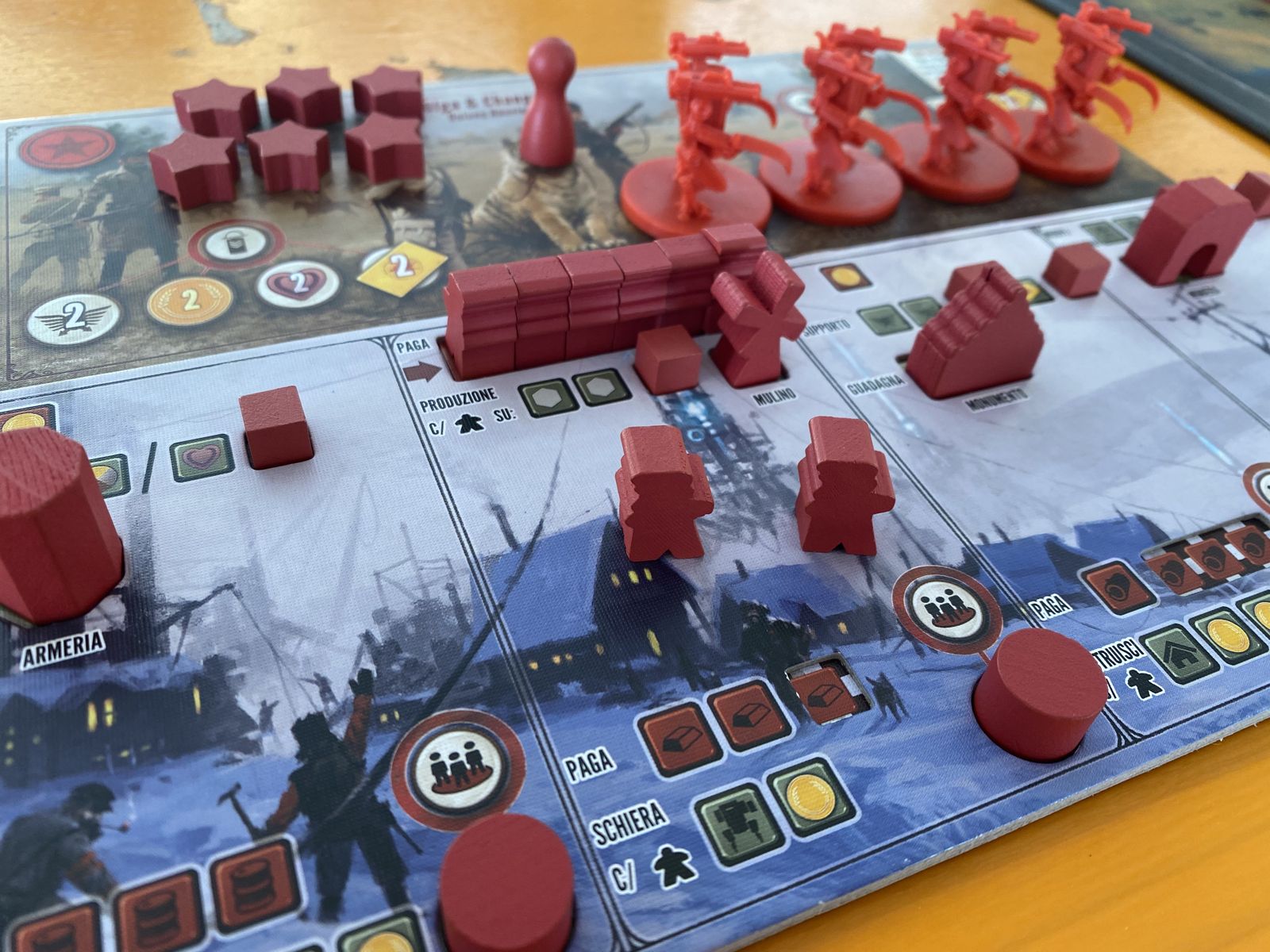
How it plays
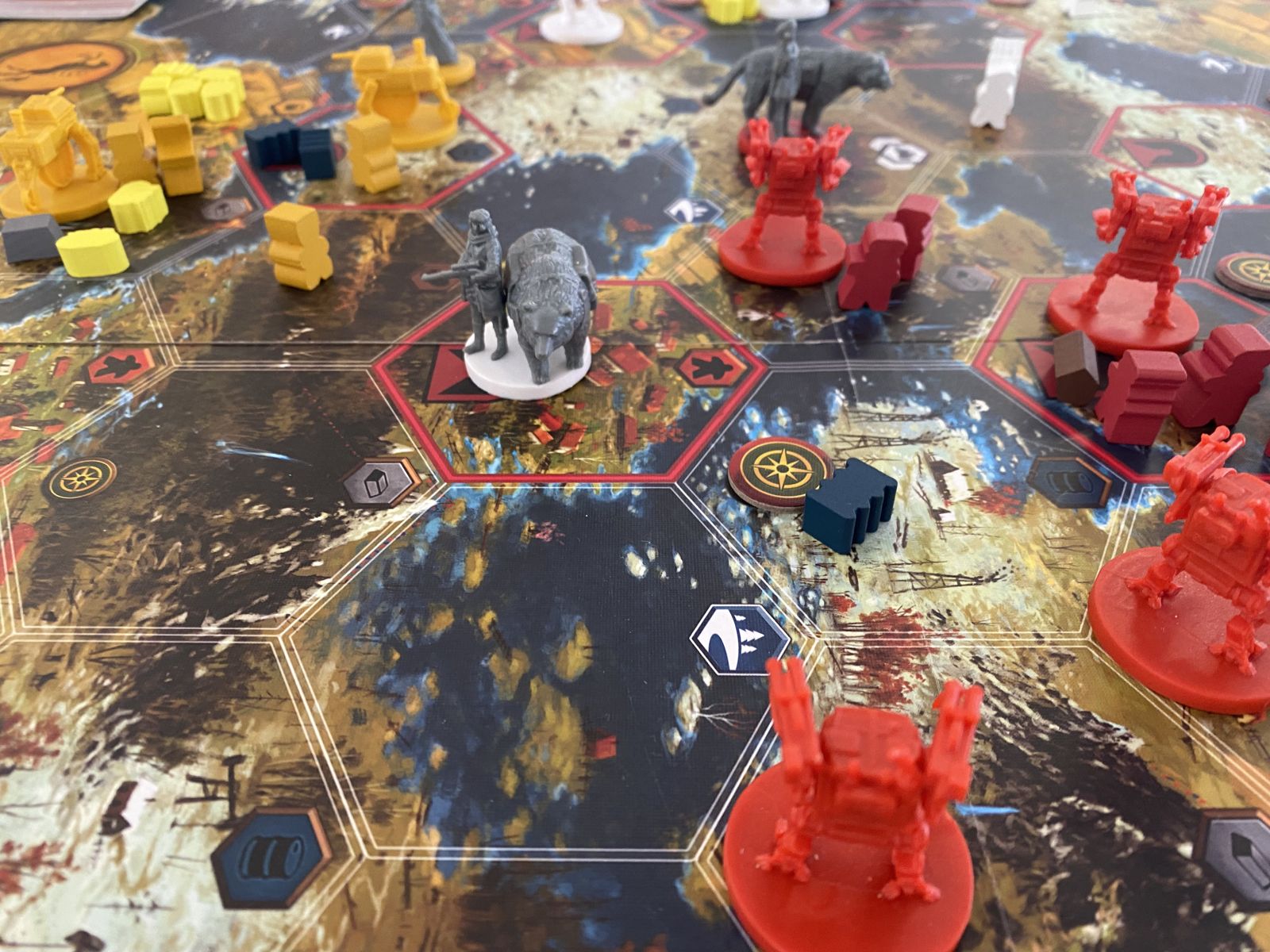
Anyone sitting down for the first time usually expects a war, but war is the secondary part. You can count the battles on one hand, one or two each, when you need them for a star. Everything else is management: you build, you produce, you move your workers to where they make the resources you actually need.
Two things make the difference. The first is your faction’s power, which you should always use. Just like in Clans of Caledonia and any asymmetric game, whoever ignores theirs plays at a disadvantage against whoever exploits it. The second is the upgrades on your board and the bonuses that trigger when your neighbours take certain actions. The sooner you get them going, the sooner you start earning for the whole game, even on other people’s turns.
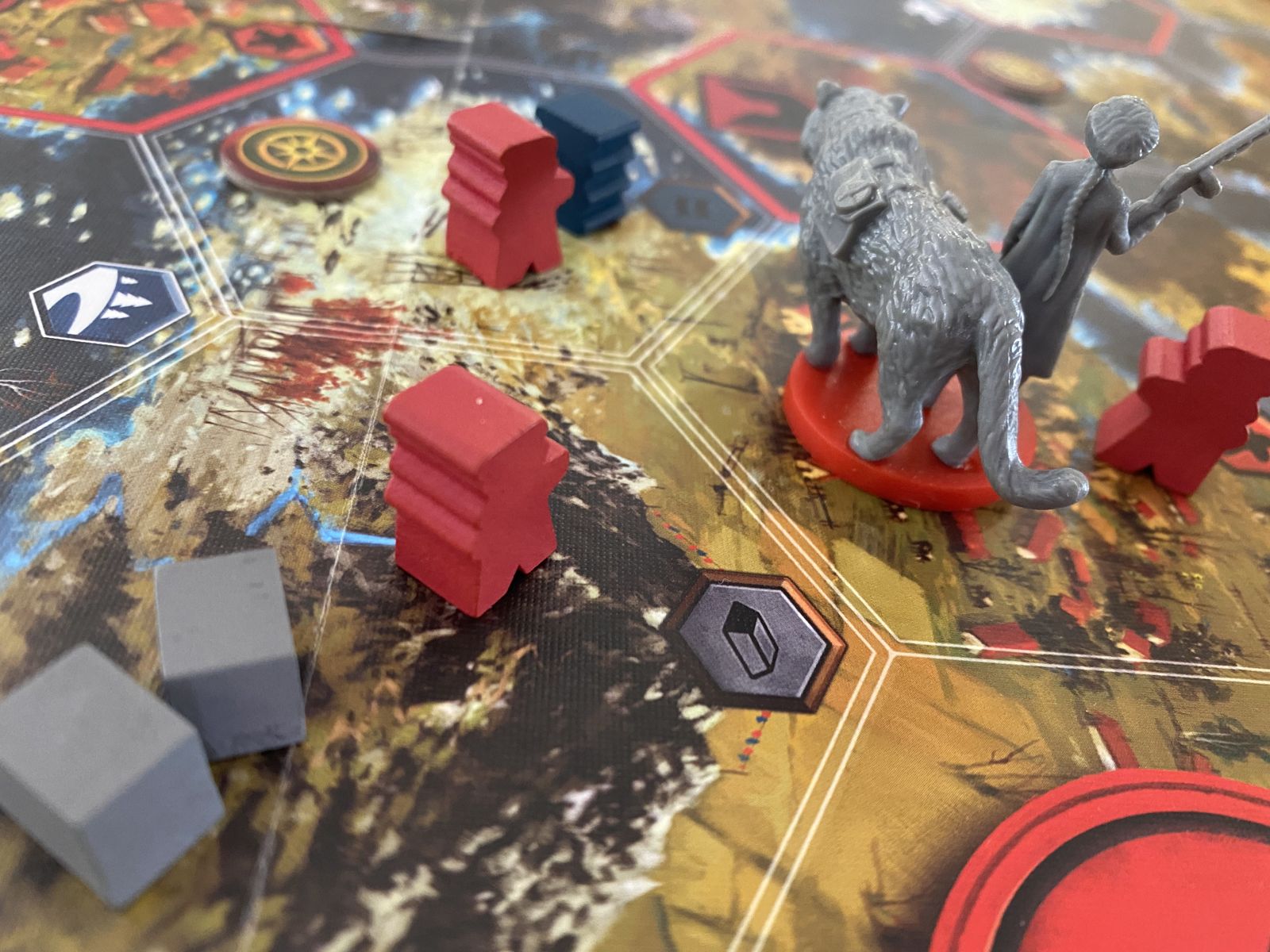
The nugget
Scythe’s world existed before the game. Jakub Różalski, a Polish illustrator, painted peasants in the countryside with mechs in the background, inspired by the Polish-Soviet war of 1919, and called that world "1920+". Jamey Stegmaier built Scythe around those paintings, and there are more than a hundred of them in the box, across cards and boards.
At our table
Hex map, mechs, miniatures: lots of people mistake it for an American-style game, and played that way it doesn’t work. To me it’s a pure euro.
How long does Scythe take?
The box says 90–115 minutes. At our table: 80 minutes at three, 110 minutes at four.
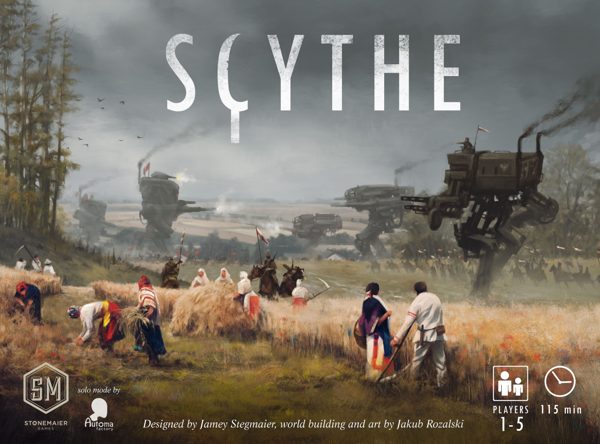
The box
Video tutorial
Show the video tutorials 6 in Italian
 Tutorial in italiano di Scythe Cercatore di Perle ·YouTube
 Scythe tutorial Miss_Meeple ·YouTube
 Scythe - Flusso di gioco The Real Oivalf ·YouTube
 Scythe - Componenti e setup [ITA] The Real Oivalf ·YouTube
 Scythe Automa - Componenti, Setup e Fondamenti di gioco The Real Oivalf ·YouTube
 Video Tutorial Scythe VaiPasso ·YouTube
Are you team miniatures or team meeples?
Euro games usually mean wood and cubes, while miniatures live in battle games. Here you get both.