What it is
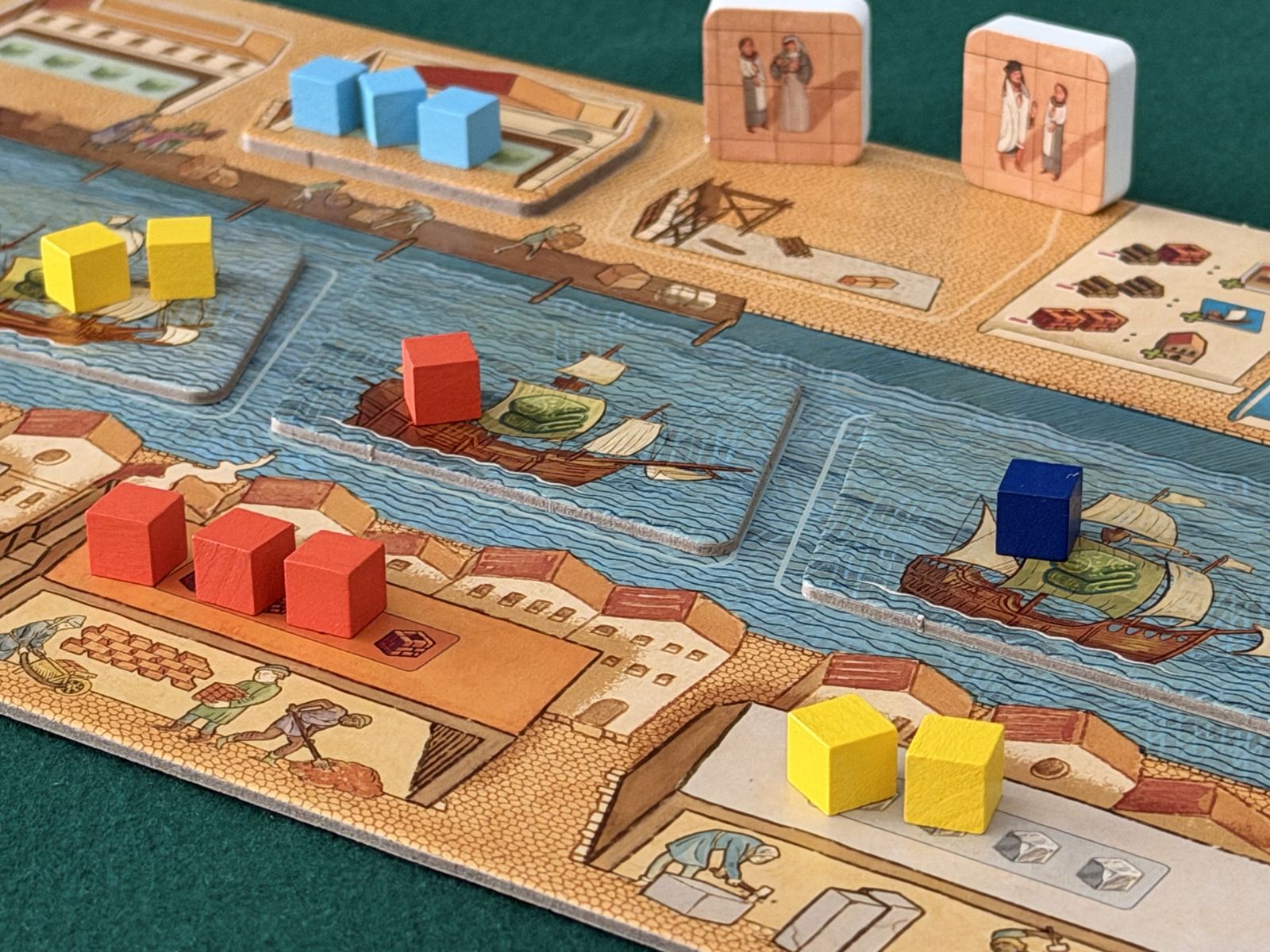
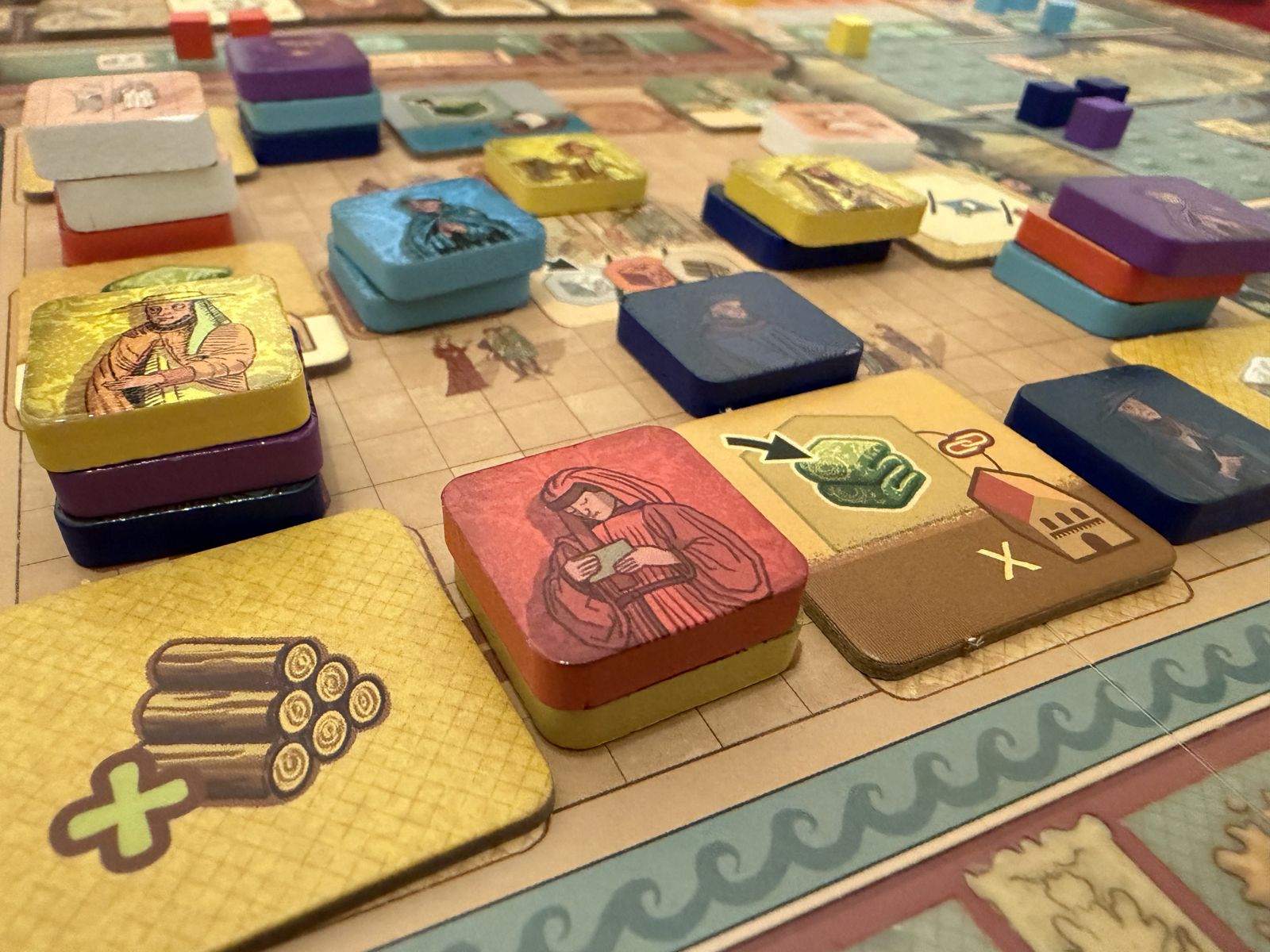
You’re a merchant in Renaissance Florence. Each turn you place a disc on an action space and carry out the two actions next to it: produce marble, wood or bricks, or weave cloth. You use those materials to donate to the city’s monuments, or to build shops, ships and new workshops.
How it plays
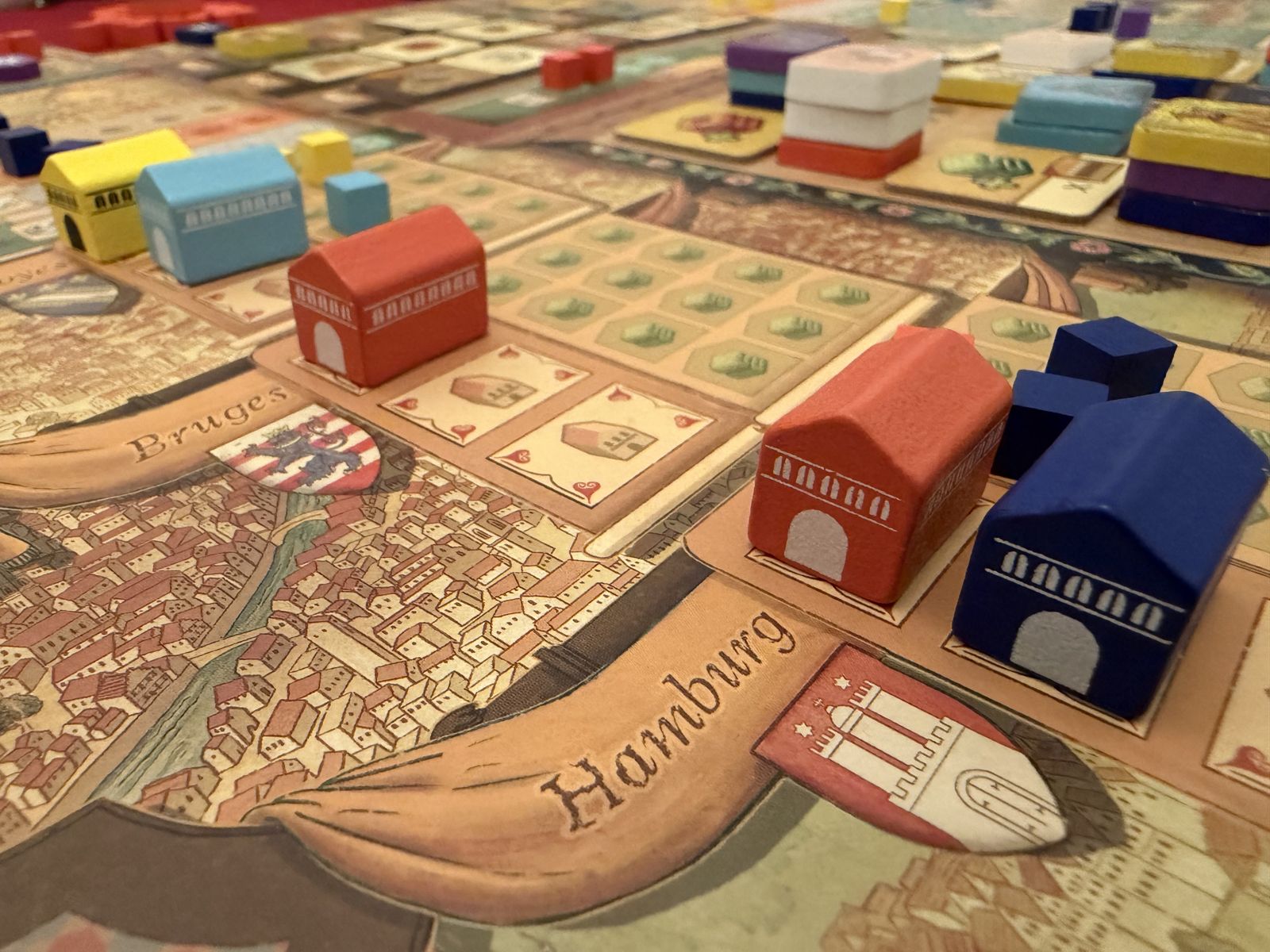
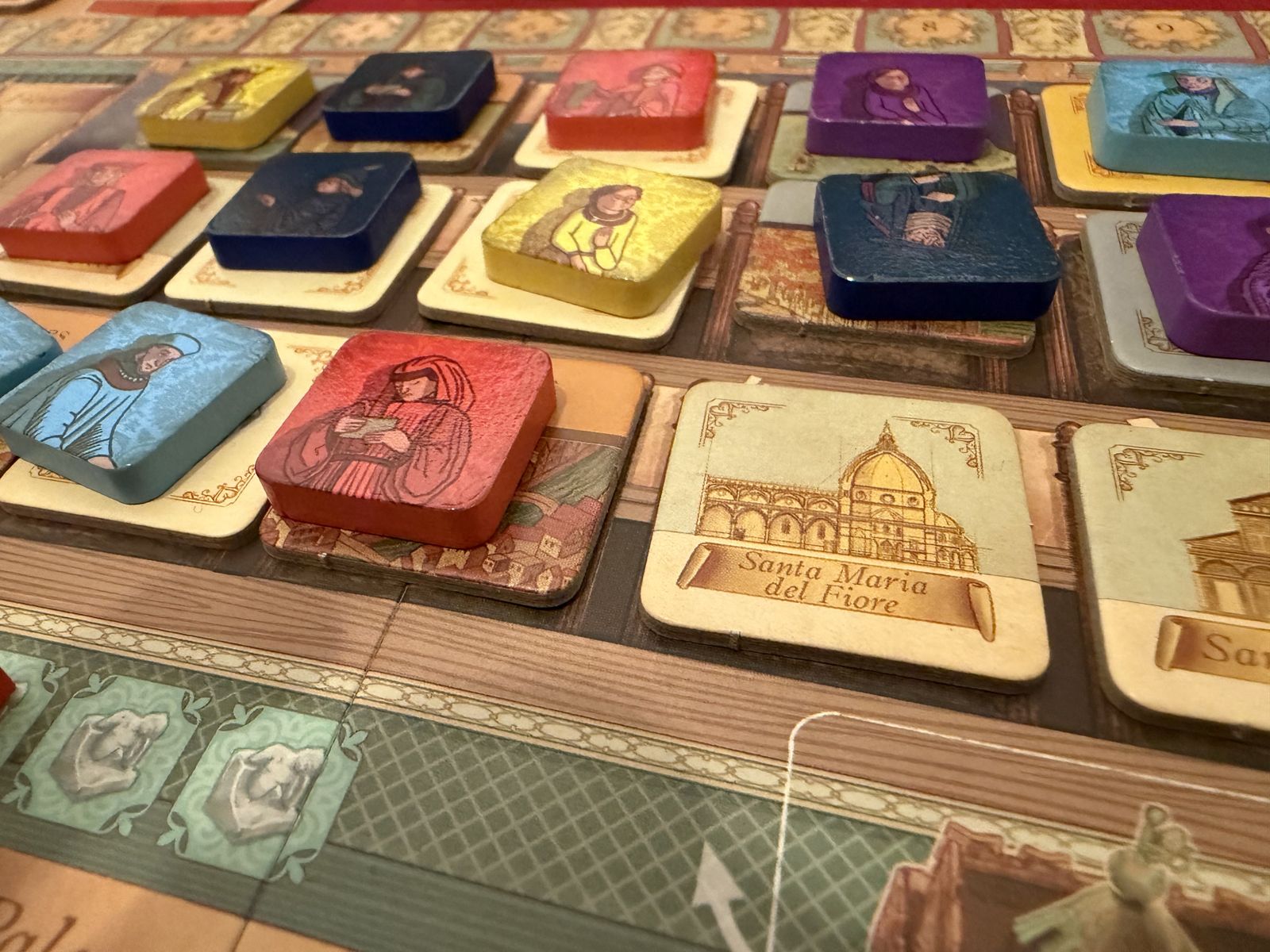
Here it’s not whoever produces or builds the most who wins. It’s whoever secures the right number of majorities, nearly twenty in a single game: some you have to let go of on purpose, because chasing all of them weakens you where it actually counts. And since they come up in a set order, you’re already planning from turn one what to go for.
The nugget
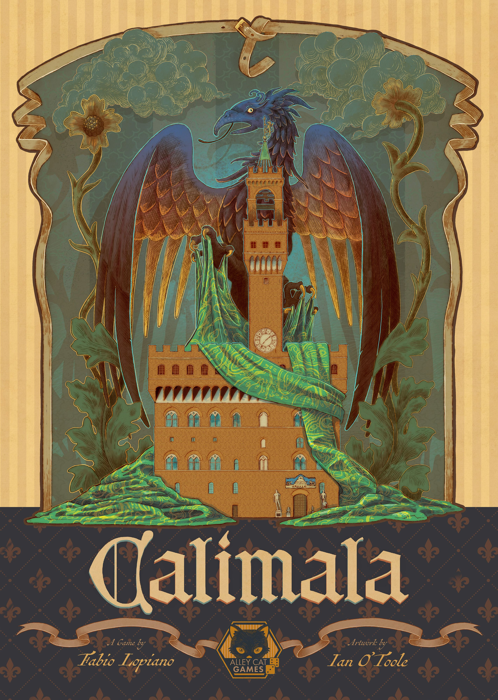
Calimala isn’t a name made up for the game: it was the Florentine cloth merchants’ guild, one of the most powerful in Florence, with its headquarters on the street of the same name, Via Calimala. For centuries it was responsible for maintaining the Baptistery of San Giovanni, and in 1401 it held the competition for its north door: Lorenzo Ghiberti won, with Filippo Brunelleschi coming second. That contest between the two of them is one of the episodes often cited as the spark of the Renaissance.
At our table
Two games on our table, and every time I end up counting majorities instead of looking at what I’m building.
The box
Video tutorial
Show the video tutorials 1 in Italian
 Tutorial in italiano di Calimala Cercatore di Perle ·YouTube
What’s the game where you win without being the strongest at anything?
Here it’s not about who produces the most: it’s about the right majorities at the right time, and winning all of them is impossible.